Monday, September 29, 2008

Answers - Writing definitions

Writing definitions of difficult concepts


  • The human spirit (term) is a metaphysical quality (class) that enables humans to lead meaningful and happy lives (distinguishing characteristics).
The human spirit is a metaphysical quality that enables humans to lead meaningful and happy lives (Somerville, 2006 p.).

According to leading ethicist Margaret Somerville (2006) the human spirit is a metaphysical quality that enables humans to lead meaningful and happy lives

  • The shared story (term) is the history and beliefs (class) held by a society that gives meaning to the lives of its members(distinguishing characteristics).

Wednesday, September 24, 2008

Teacher's Notes and Answers

Is It Right?

Originally the structure of this lesson followed a Socratic inquiry in with combinaton jigsaw reading. It has been revised with Paulo Friere's 4 step learning process drawn from his seminal work The Pedagogy of the Oppressed as articulated to our class in 'Experiential Learning and Facilitation' by lecturer Chris Jansen of The Christchurch College of Education, of the University of Canterbury, July 2009. The 4 step process is as follows:

1. Own Story - students give their own opinion on an issue
2. Expert - students examine an expert's point of view on the same issue
3. Critque - students critique the expert
4. Evaluation - students process what they have learnt from steps 1-3

The starter activity was drawn directly a lecture given by Chris Jansen, 21 July, 2009 at the Christchurch College of Education.

Socratic inquiry

Teaching usually involves simply explaining things to students. The object of a Socratic Inquiry is to ask questions of the students and have them come up collectively with the answers by themselves.

The most effective way to run Socratic inquiries is to put students into small groups of 2-4, and circulate around the groups. Give the students about five minutes to come up with a definition.

Go from group to group and listen to their definitions. Get students to make their answers coherent and clear. For example, students tend to define ethics in terms of morality. In such a case ask them what they mean by morality and how it is different from ethics. In doing this students realize that the task is much more involved than they suspected.

Don't give answers to the students but put their responses on the board. Their answers will be verified in the reading and listening comprehension exercises that follow. Students are generally surprised that their answers are close to those given by leading ethicist Margaret Somerville.

Students tend to enjoy the the fact that the concepts are not so much difficult, but that they take time to explain. This has obvious value in that it creates discussion in class, but also requires the teaching of writing definitions; one method is presented after the reading comprehension.


What is ethics? Some definitions

Somerville tells her students ethics is firstly, ' Trying not to do the wrong thing', and secondly, '[trying] to do good things for other people'.

Ethics is the systematic investigation of questions of right and wrong, good and bad (UNESCO, 2003)

Ethics, in the empiricist view, is conduct favored consistently enough throughout a society to be expressed as a code of principles (Wilson, 1997 p.267)

Morality

The term “morality” can be used either descriptively to refer to a code of conduct put forward by a society or, some other group, such as a religion, or accepted by an individual for her own behavior or normatively to refer to a code of conduct that, given specified conditions, would be put forward by all rational persons.

Bernard Gent - Standford Encyclopedia of Philosophy

Comparison of Ethics and Morality

Ethics is derived from the Greek word ethos denoting customs. Morality comes from the Latin mores also meaning customs. Although they have the same original meaning, nowadays 'morality' has a religious connotation whereas 'ethics' does not.
'Ethics' can be considered as the study of what is right and wrong and this would naturally encompass the study of 'morality'
.

(philosophyblog.au.com)

2. Consider the following issues and decide whether they are right or wrong:


Make sure students to define these things before they embark on deciding whether these things are right or wrong. For example, it is necessary to discuss the meaning of marriage before deciding whether same sex marriages are right. The answers to this question are revealed in the ABC radio interview with Somerville. She opposes these kinds of marriages because inherent in the notion of marriage is the right to have children, and is concerned about the impact them.

As for discussing the issues of cloning, nuclear power and genetically modified organisms, the effectiveness of this relies on their general knowledge of the procedures and the risks. In some classes students feel they can't form an opinion owing to a lack of knowledge.

To resolve this problem you could set up a pre-class homework task in which groups of students investigate the pros and cons of one of the issues. In class they form groups with representatives from each research group and share the information of risks and benefits.


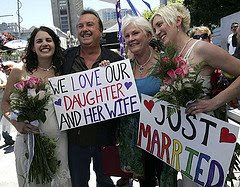
Gay/lesbian marriage
pollution
the extinction of the polar bear
nuclear power
cloning
genetically modified crops


3.Why is it hard to decide whether these things are right or wrong?

There has been a breakdown of what Somerville calls the 'shared story'. That is, in modern secular multicultural democracies no single world view dominates. Therefore, it is hard to make ethical decisions that will satisify all members of society. Somerville explains this in Extract A in the reading comprehension. You will find that most students come to this very quickly.

4. Nowadays people seem to be preoccupied with ethics, both in the sciences and in the rest of society. Why do you think this is so?

Somerville explains in Extract A in the reading comprehension that science and technology has brought us to a position where we can change the nature of humanity and destroy ourselves. There is an urgent need to restrict research for our own protection.

References
Distinction between morality and ethics -philosophyblog.au.com
Gent, B http://plato.stanford.edu/entries/morality-definition/
UNESCO(2003) COMEST -Report of the working group on the teaching of ethics. pp.29


Return to :

Is it Right? Introducing Margret Somerville


Tuesday, September 23, 2008

Answers - Socratic Enquiry and Readings

1.What is ethics?

See teacher's notes


2. Consider the following issues and decide whether they are right or wrong:

There are no right or wrong answers at this stage - only points of view.


3.Why is it hard to decide whether these things are right or wrong?

This question is answered by Margaret Somerville in the extracts provided, but first here are some answers provided by students:

  • Because the consequences of these things are hard to predict.

  • Because societies are multicultural and ther is no one standard.

  • The individual counts, and as everyone values differently it is very hard to decide.

There has been a breakdown of what Somerville calls the 'shared story'. That is, in modern secular multicultural democracies no single world view dominates. Therefore, it is hard to make ethical decisions that will satisify all members of society. Somerville explains this in Extract A in the reading comprehension. You will find that most students come to this very quickly.

4. Nowadays people seem to be preoccupied with ethics, both in the sciences and in the rest of society (Toulouse, 2006; Somerville, 2006). Why do you think this is so?

Somerville explains in Extract A in the reading comprehension that science and technology has brought us to a position where we can change the nature of humanity and destroy ourselves. There is an urgent need to restrict research for our own protection. Students answers are often close to those given by Toulouse and Somerville.

Readings

Somerville proposes that a universal ethics can be created by accepting two universal values:

"First, we must always act to ensure profound respect for all life, in particular, human life; second we must protect the human spirit."


Return to:

Is it Right? Introducing Margaret Somerville


References

Distinction between morality and ethics -philosophyblog.au.com


Gent, B http://plato.stanford.edu/entries/morality-definition/

UNESCO(2003) COMEST -Report of the working group on the teaching of ethics. pp.29

Monday, September 22, 2008

Answers: Listening - Interview with Margaret Somerville

1.Why is Margaret Somerville protected by body guards ? 1:30-3:00 mins.
Her ideas are very controversial, especially those relating to the fact that she doesn't believe that same sex marriages are a good idea. A Canadian university wanted to give her an honorary doctorate for her work in ethics but there was a national campaign to block this. There were protests and the body guards were there to protect her.

2. What is her stand on gay rights? 1:40-2:00 mins.
She believes that gays have suffered terribly from discrimination, and that we should recognise their rights. However, she opposes same sex marriage because of its effect on children. She talks about this in greater detail later in the interview.

3. How does she feel about pain? Explain why she opposes circumcision of infants. What are some benefits of circumcision? 3:06-4:14 mins
She believes there is a fundamental human right not to be left in pain or to have pain inflicted on us, unless it is absolutely justified. She opposes infant circumcision because it is painful. There is apparently some evidence that circumcision prevents to some extent transmission of HIV in Africa. However, this, she says, should not justify practising circumcision on children.

4. Margaret Somerville was accused of anti-semitism because of her opposition to the practice of circumcision on infants. However, five Jewish rabbis defended her. Why? 4:13-4:42 mins.
It became an issue not of whether her arguments were right or wrong but of freedom of speech.

5. Why has she become the most cited academic in Canada? 5:03-5:30 mins
The issues of circumcision or same sex marriages were not really the concern for the media or the public at large. What was more important was her right to express her views; that is, the central issue was freedom of speech.

6. Why is Somerville always in the media? 5:57-7:05 mins
In Canada academics are in 'the public square'. She explains that this was something that was traditionally looked down on by some academics. However, she feels she has an obligation to explain her research to the general public for the reason that they, as taxpayers, are funding it. She says she gives from 500-800 interviews a year, and finds it a learning experience to engage with the public.

7. Somerville has a taste for controversy. Retell her run in with her teacher Sister Rosemary at the age of seven, and then explain why she may like being in controversial situations. 7:05-9:45 mins.
Her father was an athesist and communist, her mother was a practising catholic and took Margaret to mass on Sunday mornings. Naturally, her father refused to go. Margaret said she didn't see why she had to go if her father wasn't going. Her mother told her that he would go to hell for this. The following morning at school her teacher Sister Rosemary at the catholic school she attended asked the class if they wanted to go to heaven. Margaret was the only child who said she wanted to go to hell. She wanted to go there because that's where she thought her father was going and she wanted to be with him.This made her feel 'out on a limb'. She feels she enjoys controversy partly because of the attention it drwas to her, but also because it is her way of finding out what is right.

8. What is Somerville's definition of ethics? 9:45-10:12 mins
Somerville tells her students ethics is firstly, ' trying not to do the wrong thing', and secondly, '[trying] to do good things for other people'.

9. Explain why she opposes same sex marriage. 11:01-16:30 mins.

-What does she mean by "Can the future trust us?"
Somerville's central ideas are contained in two books The Ethical Canary and the Ethical Imagination. She advocates there should be respect for all life especially for human life.
Her question for her students is 'can the future trust us?' By this she is referring to the health and well being of future generations which could be altered through genetic engineering and the new reproductive trechnology which can change who we are fundamentally as human beings.
-Talk about the definition of marriage
Marriage is for men and women and it automatically includes the right to found a family. Marriage therefore is not for homosexual couples.
-Mention advances in medical science to enable homosexual couples to have their own genetic children
Recently researchers have managed to create a mouse baby from two female mice. She says that this technology will soon be available to humans. What is done in animals will in 5-10 years be possible in humans. Somerville is concerned about the impact on the children born to same sex parents. In the Ontario Supreme Court it was decided that gay couples could have the right to benefit from this new reproductive technology, and to do otherwise would be discrimination. She also talks about the fact there are now children with three genetic parents.
What are 'the civil unions' in the UK and le pax civile in France and why were they created?
They are contracts that gay couples could make a public declaration of their love for one another, as well as protect them financially enabling them to inherit fromone another. Civil unions don't carry the right to have children and for this reason Somerville is in favour of them.
10. What is transhumanism and what are her views on it? 16:35-20.00 mins.
Transhumanism is the belief that modern day humans are obsolete.
She opposes this because changing what we are would compromise our 'essence of humanness '. She admits that she does not have a complete definition of this and it is her main project. Nevertheless, she explains that this essence deserves protection because it has developed over 4 billion years of evolution.
She is also concerned about the production of robots for whom transhumanists claim will deserve more respect owing to their superior intelligence. She is also worried about the production of 'cyborgs', part human part machines, that are able to experience emotions, and the questions of how much respect is owed these creatures.
-What is her major project?
It is to identify the essence of humanness described above, and tied to this is the concept she calls the 'secular sacred'. This basically means finding points for which all parts of society can agree are sacred and therefore inherently wrong to change. This involves 'building bridges between science and ethics, science and religion'. She also says she is looking at alternatives to reason which she calls 'other ways of knowng'. She is looking also to bring the major religions together by finding common values that they can all share.

11.She claims that the evolutionary biologist Richard Dawkins the author of The God Delusion is "mystically tone-deaf", what does she mean by this? 20:02-21:35 mins.
This means that he cannot appreciate the mystical or the artistic in the same way that someone who has no musical ability cannot hear different notes in a scale.

12. Richard Dawkins blames all the evils in the world on religion. What is Somerville's response to this? Do you agree with her reasoning? 21:35- 22:48 mins.
She thinks this is very unfair. He blames 9/11 on religion. You could argue that science is the root of evil.She argues that the airplanes were created through science. Religion can be used for good or evil and science is the same.

13. What are Somerville's thoughts on the existence of God and an afterlife? 22:49-25:33 mins.
She doesn't really answer this question directly, and certainly her anwser is both vague and difficult. Nevertheless, she says that what is more important than the existence of God or an after life is that we exist in a great mystery that is not explicable in our language and we can only have a 'sense of it'. (It is ironic that this is Richard Dawkins' view too! See Richard Dawkins book Unweaving the Rainbow published in 1998). She gives an example of research being carried out that shows that our minds are far more complex than we know, they contain mechanisms to detect up to now 'unknown realities' which are more mysterious and awe inspiring than we can imagine.
14. Somerville cites a Japanese saying, explain what it means and why she said it.
"As the radius of knowledge expands the circumference of ignorance increases."25:33-26:00 mins.
She sees science as uncovering more and more mysteries instead of satisfying our curiosity. This she says is a kind of a miracle.


Return to:

Is it Right? Introducing Margaret Somerville

Tuesday, September 9, 2008

Why save biodiversity? Instrumental Value

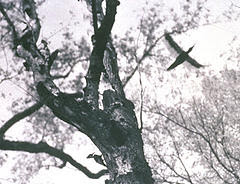
"I have seen flocks [of passenger pigeon] streaming south in the fall so large that they were flowing from horizon to horizon in an almost continuous stream all day long, at the rate of forty or fifty miles an hour, like a mighty river in the sky,..." From The Story of My Boyhood and Youth, by John Muir, 1913

***

Aims: Categorizing information, TOEFL iBT academic speaking practice, persuading, suggestions, and negotiations.

Black Stilt (Himantopus novaezelandiae)


  • Consider this:


The black stilt (Himantopus novaezelandiae) of New Zealand is the rarest wading bird in the world and classed as "critically endangered" by the IUCN. In 2002 there were only 11 breeding pairs and a total of 84 individuals remaining in the wild. In 1998 the New Zealand Department of Conservation was spending $4 million per year in trying to save it and its habitat. It is possible that it is already extinct having been hybridised out of existence by interbreeding with its close relative the pied stilt (see The Ethnic Cleansing of Nature).

Vocabulary

stilt: long legged shore bird; cf stilts: wooden leg extensions

wading: walking in water

breeding: reproducing

the wild: not in captivity

pied: black and white

Discussion

Is the Department of Conservation wasting its time and money in trying to save the black stilt?

Reading and Speaking

Each student is responsible for reading one of the following texts. The task is to form a study group in which each student communicates the contents of their reading in their own words to the others. Students use this information and complete the table below with the names of species.

iBT TOEFL Training Optional Speaking Exercise

In the speaking section of the Internet Based TOEFL you will be given a text of approximately 100 words to read. The text will have a question that goes with it. You will have 45 seconds to read the text (i.e. just over 2 words per second), then 30 seconds to prepare your answer, and finally 60 seconds to record your answer (Sharpe, 2006 p.246).

To practise for this part of the test work with a partner. One of you reads and answers the question, while the other works as the time keeper and coach. The time keeper should have read the text as well, so that they can comment on your accuracy.

Please note, the readings below are sometimes longer or shorter than 100 words; however, you have proportionally the same time.

_________________________________

Table 1 Instrumental value of species

_________________________________

Goods:

_________________________________

Services:

_________________________________

Knowledge:

_________________________________

Psycho-spiritual: The giant panda

_________________________________


1. Instrumental Value

Text 1

The instrumental, anthropocentric or utilitarian value of things all refer to the idea that the worth of something is dependent on how much it is useful for the benefit of humans. Instrumental value of plants and animal can be divided into four categories:goods, services, knowledge and the psycho-spiritual.

Let's look at each one. 'Goods' refer to the use of other life forms as fuel, fibre or medicine. 'Services', include pollination, nutrient recycling and global homeostasis. 'Knowledge' is the notion that every species has something interesting about it, and the extinction of an organism before it can be studied is like burninng a book or part of library that you have never read. Finally, the 'psycho-spiritual' value of an organism is what it contributes to our sense of well being (Meffe, et al, 1997).

136 words. Reading time: 61 seconds .

Question: What is the instrumental value of an organism?


Now consider the following extracts and decide whether they are to do with goods, services, knowledge or the pyscho-spiritual.

***

Text 2


'I found out a good many years back practically all I need to know about my general reader; that is to say, you, I'm afraid. You'll deny it up and down, I fear, but I'm really in no position to take your word for it. You're a great bird-lover. ... [Y]ou're someone who took up birds in the first place because they fired your imagination; they fascinated you because 'they seemed of all created beings the nearest to pure spirit- those little creatures with a normal temperature of 125°'. Probably... you thought many thrilling related thoughts; you reminded yourself, I don't doubt, that: 'The gold crest, with a stomach no bigger than a bean, flies across the North Sea! The curlew sandpiper, which breeds so far north that only about three people have ever seen its nest, goes to Tasmania for its holidays!' (Salinger,1959)

182 words. Reading time: 1 minute 22 seconds

Question: What kind of things does the writer hope will inspire his "general reader"?

***

Text 3

'Critics of environmentalism...usually wave aside the small and unfamiliar, which they tend to classify into two categories, bugs and weeds. It is easy for them to overlook the fact that these creatures make up most of the organisms and species on Earth. They forget, if they ever knew, how the voracious caterpillars of an obscure moth from the American tropics saved Australia's pastureland from overgrowth of cactus; how a Madagascar "weed", the rosy periwinkle, provided the alkaloids that cure most cases of Hodgkin's disease and acute childhood leukemia; how another substance from an obscure Norweigian fungus made possible the organ transplant industry; how a chemical from the saliva of leeches yielded a solvent that prevents blood clots during and after surgery; and so on through the pharmacopoeia that has stretched from the herbal medicines of Stone Age shamans tot he magic-bullet cures of present day biomedical science.' (Wilson, 2006 p.30-31)

154 words. Reading time: 1 minute 10 seconds

Question: Explain why we should care about tiny and little known organisms.

***
Text 4

'The passenger pigeon, or wild pigeon, as it was often called, is generally believed by ornithologists to be extinct. Of the mighty hosts of this splendid bird that swarmed over the country [The United States], not a single individual is thought to remain alive to-day, and yet within the memory of men not yet old, the bird was well known, and the possibility of its extinction was far from their thoughts. Indeed, whenever laws were proposed for conserving the bird, the cry at once went up that it needed no protection, for its numbers and the extent of country over which it ranged were both so huge that protection seemed unnecessary. Even the tardy protective laws passed by some States were largely disregarded.
At last, in 1910, 1911, and 1912, when it was too late, attempts were made to save the bird, and rewards that totaled more than $1,000 were offered for evidence that it was living and nesting-the live bird, not the dead one was sought. But it was all in vain. The passenger pigeon appears to have gone the way of the dodo and the great auk." (Townsend, 1932)

190 words. Reading time: 1 minute 26 seconds.

Question: Explain why the legal protection of the passenger pigeon failed.

***

Text 5

'We may never personally glimpse certain rare animals -wolves, ivory -billed woodpeckers, pandas, gorillas, giant squid, great white sharks, and grizzlies come to mind - but we need them as symbols. They proclaim the mystery of the world. They are jewels in the crown of the Creation. Just to know they are out there and well is important to the spirit, to the wholeness of our lives. If they live, then Nature lives. Surely our world will be secure, and we will be better for it. Imagine the shock of the following headline: LAST TIGER SHOT, SPECIES NOW EXTINCT.' (Wilson,2006)

100 words. Reading time: 45 seconds.

Question: Explain Wilson's argument for protecting rare animals such as the giant squid and the great white shark.

***

Text 6

'Insofar as environmentalists believe that the experience of nature is a necessary condition for developing a consistent world view, one that fully recognises man's place as a highly evolved animal whose existence depends on a fully functioning ecosystem, they also believe that such experiences have a transformative value. Experience of nature can promote questioning of and rejection of overly materialistic and consumptive felt preferences' (Norton, 1987, p.189 ).

68 words. Reading time: 31 seconds

Question: What two things do environmentalists think contact with the natural world can do for people?

***
Text 7

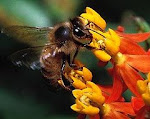
Ecosystem services are the natural processes that keep humans alive (Krebs, 2000). They include such things as: water and air purification, nutrient cycles, seed dispersal, the ozone layer that shields us from harmful ultraviolet rays, pollination of crops by bees and other organisms, and so on (see Krebs( 2000) and Campbell & Reece( 2005 ) for a complete list). They have enormous value, and without them our societies would simply collapse (Meffe, et al, 1997). For example, Albert Einstein is reported to have said: "If the bee disappears from the surface of the earth, man would have no more than four years to live. No more bees, no more pollination … no more men!” It is widely believed that the ability of the earth to performs these services hinges on biodiversity. That is, each species participates in one way or another in the health and stability of ecosystems necessary to sustain us. Loss of species through human activity leads to a deterioration of these vital processes and hence poses a grave threat to human existence(Campbell & Reece, 2005; Lovelock, 2006).

177 words. Reading time: 1 minute 20 seconds
Question: Why is biodiversity necessary for the maintenance of human society?

Text 8

Biodiversity hotspots were first defined by biogeographer N. Myers in 1988. They are areas of exceptionally high endemism (that is, of species found nowhere else in the world) combined with an unusually high threat of destruction. In 1997, 18 hotspots were identified, 14 of which are found in tropical forests (Meffe et al, 1997 p. 141). There are now 34 hotspots containing around 75% of the Critically Endangered Species as listed by the IUCN (Bowen, 2009). Over the past 50 years 90% of the world's armed conflict has occurred countries containing hotspots, and 80% occurred in the hotspots themselves (Mittermeier, et al 2009). Even though natural resource competition is a factor in the generation of war (Hinde and Rotblat, 2003), the authors are reluctant to attribute this, or any other cause, for the strong correlation between biodiversity hotspots and war. They are more concerned about highlighting the urgent need for peace in these areas, notably as war exacerbates wildlife loss. For example, during the conflict in the DRC, Virunga lost 95% of its hippos.

170 words. Reading time: 1 minute 17 seconds

Question: What are biodiversity hotspots, and what is the relationship between them and war?


Answers


Persuasion

You are an engineer working on the construction of a hydroelectric dam. You discover that the site is host to a number of endemic and rare species of plants and birds. Persuade your colleagues to either ignor the data or to consider moving the proposed site or halting it all together.

Further Reading

The Passenger Pigeon


References

Bowen, L. (2009) The Hottest Spots: Conservation in War Zones , Conservation International.org

Cambell,N.A. and Reece, J.B. (2005) Biology, Seventh Edition. Benjamin Cummings, San Francisco, p.1212

Hind, R. & Rotblat, J. (2003) War No More. Pluto Press. London. p.86

Krebs, C.J. (2000) Ecology. Fifth Edition. Benjamin Cummings, San Francisco p.603

Lovelock, J. (2006) The Revenge of Gaia

Meffe et al, 1997, Principles of Conservation Biology, Sinauer, Massachusetts, p.31

Mittermeier, R.A., Machlis, H. & G., Brooks, T., Fonseca, G., Hoffmann, M., Lamoreux, J.F., Mittermeier, C., Pilgrim, J.D. (2009) 'Biodiversity Hotspots and Warfare.' Conservation Biology.

Muir, J. (1913) The Story of My Boyhood and Youth. Houghton Mifflin Company. Boston. p. 159.

Norton, B.G. (1987) Why Preserve Natural Variety? Princeton University Press, Princeton, New Jersey, p.189

Salinger, J.D. (1959) Seymour: An Introduction. The New Yorker, June 6, 1959

Sharpe, P. (2006) Barron's TOEFL iBT Internet Based Test 2006-2007, 12th Edition, Barron's New York.

Townsend, C.W. (1932) 'The Passenger Pigeon.' Life Histories of North American Gallinaceous Birds: Orders Galliformes and Columbiformes. Arthur Cleveland Bent, U.S. Govt. Print. Off.. Washington, DC. p.379.

Wilson, E.O. (2006) The Creation. W.B.Norton & Co., New York, London. pp. 57-58

Wilson, E.O and Kellert, S (1990) The Biophilia Hypothesis. Island Press p.31


Photos


Nature, Art & Language

© All Copyright, 2007, Ray Genet


Social responsibility of scientists

Starter

Watch the following video clip from Bride of Frankenstein on Youtube:
http://www.youtube.com/watch?v=CiFfUnimUH4


"Own Story"

In groups of 2-3 discuss the following questions, afterwards share your answers with the class:

  1. Do you think Dr.Frankenstein had the right to create the monster and then the monster's bride?
  2. With so much knowledge about how to change and control the natural world, do you think science graduates have enough social and ethical skills to responsibly use their know-how?
  3. Do you think it is the responsibility of scientists to report unethical practices and dangers to public safety to the media?
  4. In your opinion what are the characteristics of a truly great scientist?
  5. Should scientists be involved in politics and social organisation?

"Expert"


Reading Comprehension

The following extracts come from the article 'Scientific revolutions and moral revaluations' by the French physicist Gerard Toulouse.

Instructions

This is an information exchange exercise. The class is divided into three groups. Each one is responsible for reading one of the extracts below.
Afterwards, they answer questions related to their text. Each group has a copy of the other groups’ questions.
Once the texts are read and the questions completed, the answers are shared in a seminar. Students must listen, take notes and ask if they don’t understand.


Extract 1

...during the last eight decades, growing waves of concern about the connections between science and war, about the health of our planet, and about the manipulation of life processes have convinced most people that serious reflection and action was due. Around the turn of the millenium, it became accepted practice that any novel important research program should include an ELSA component (Ethical, Legal and Social Aspects of Science).

For many years, a set of practical questions have persistently haunted me : At which conditions, can a student embrace a career in scientific research, without becoming or turning into a public hazard ? What share of his/her time and efforts should be devoted to ethics-related reflection, and what background formation should he/she be offered ? Which initiatives, within teaching and research institutions, could help and nurture a proper environment ? " Science as salvation " was part of my youth dream ; to what extent, and how, can such a dream be sustained, honestly, nowadays ?

***

Extract 2

Knowledge brings responsibility, because knowledge is (a form of) power, and power brings responsibility. Scientists have a duty of alert, because they are best placed to alert society to the possibly harmful consequences of their activities, discoveries and inventions ; they have competence, and capacity for early warning. Scientists have a continuing responsibility, because the outcome of scientific research (its direct and indirect consequences) is at least partly unpredictable ; this continuing responsibility implies a duty of discernment and vigilance, sustained on the long term.

In his Nobel lecture, Jo Rotblat said : Whistleblowing should become part of the scientific ethos. The life of Albert Einstein provides an illustration of scientific whistleblowing : duty of alert (his four letters to Roosevelt, from 1939 to 1945), continuing responsibility (his last signature was for the Russell-Einstein manifesto, which thus acquired the symbolic value of a testament). Encouraged by the example of Einstein (and his readings of Albert Schweitzer, Leo Szilard, Linus Pauling, Niels Bohr), Andrei Sakharov has given a model of personal moral revaluation, unique in its amplitude and subsequent worldwide impact ; in his words : Every true scientist should undoubtedly muster sufficient courage and integrity to resist the temptation and the habit of conformity.

Extract 3

"I am convinced that science departments with a broad scope, integrating also societal concerns and questions of global relevance in their courses and daily discussions will succeed in overcoming the present difficulties of recruiting students. (…) I have to admit that I myself would prefer, if I had to start again, a study that combines top science with societal concerns and global vision, rather than detached, stand-alone science, even if the latter would be taught by the most knowledgeable international specialists. (…) Who else, if not the scientists, is responsible for setting guidelines for defining progress and for protecting the interests of future generations ?

Richard Ernst, Noble Laureat, 1991 cited in Toulouse(2006)


Questions for Extract 1


-Vocabulary

From the context try to work out the meaning of the following words; if you can't use a dictionary - Merriam-Websters- Online Dictionary:

hazard, novel, sustained

a) Why is ethical reflection important now?
b) What is ELSA?
c) As a science teacher what was Gerard Toulouse's persistent worry in relation to his students?
d)What was Toulouse's vision for science, and why does he doubt it can be realised?
e)What title or subheading would you give this extract?


Questions for Extract 2

-Vocabulary

From the context try to work out the meaning of the following words; if you can't use a dictionary - Merriam-Websters- Online Dictionary:

duty, harmful, sustained, whistleblowing, muster, habit

a)Why should knowledge engender responsibility?
b)Why should the responsibility of blowing the whistle on unethical practices in science fall on scientists?
c) According to Andrei Sarkharov scientists habitually refuse to take ethical responsibility for their research because they:
i) are frightened of rocking the boat.
ii)have no social conscience.
iii) are only interested in the results of their research and this overrides risks to public safety.
iv)concerned that they will stand out.
d)What title or subheading would you give this extract?


Questions for Extract 3

-Vocabulary

From the context try to work out the meaning of the following words; if you can't use a dictionary - Merriam-Websters- Online Dictionary:

overcoming, broad scope, guidelines


a) Why do many science faculties find it hard to attract new students?
b)What kind of science course would Richard Ernst liked to have studied when he was a student? c)As a student who would Ernst have preferred to have as a guest teacher: a famous physicist or a local lecturer in sociology?
d) Who, according to Ernst, in society should be responsible for providing the standards for success and safety in society?
e)What title or subheading would you give this extract?


"Critique"

What aspects of these extracts do you agree or disagree with? Express your opinions backing them up with reasons.

*PHELMA students responses and Prof. Gerard Toulouse's comments


"Evaluation"

Without talking to your neighbour write a few words describing what you have learnt; in other words, have your opinons changed or have they been confirmed? Submit your comment as comment to this post.


Answers

Nature, Art & Language


References

Gerard Toulouse (2006) - 'Scientific revolutions and moral revaluations'

  • All extracts used with permission from Gerard Toulouse.

© All copyright. Ray Genet 2008 - revised August 2009

Saturday, September 6, 2008

Torture

FREDERICK: You missed a very dull TV show about Auschwitz.More gruesome film clips...and more puzzled intellectuals declaring their mystification over the systematic murder of millions. The reason why they could never answer the question "How could it possibly happen?" is that it's the wrong question. Given what people are, the question is "Why doesn't it happen more often?".

From the film 'Hannah and her Sisters' (1984) Written and directed by Woody Allen


A leading biologist once said that, "Nothing in biology makes sense except in the light of evolution."*If this is so, make sense of the following observations of chimpanzee behavior:

a)'Martin Muller is as broad shouldered and tall as an England rugby forward, yet he was frightened. It was August 1998 in Uganda. He heard screams and the sound of something being pounded. He ran through the forest towards the noise; when he burst into a clearing he saw 10 chimpanzees had captured and killed another."The pounding that they were doing was on his body. The front of the chimpanzee was covered with 30 or 40 puncture wounds and lacerations, the ribs were sticking up out of the rib cage because they had beaten on his chest so hard. They had ripped his trachea out, they had removed his testicles, they had torn off toenails and fingernails. It was clear that some of the males had held him down, while the others attacked."

b)It was a four-year "war" witnessed by Dr Jane Goodall, and Dr Muller's PhD supervisor, Richard Wrangham, a professor of primatology from Harvard University, Boston, that put an end to our cosy ideas.In the Seventies, Prof Wrangham and Dr Goodall watched a group of chimpanzees split into two factions. One group killed every male and some of the females in the other group. The victims had recently been their companions.