FREDERICK: You missed a very dull TV show about Auschwitz.More gruesome film clips...and more puzzled intellectuals declaring their mystification over the systematic murder of millions. The reason why they could never answer the question "How could it possibly happen?" is that it's the wrong question. Given what people are, the question is "Why doesn't it happen more often?".
From the film 'Hannah and her Sisters' (1984) Written and directed by Woody Allen
A leading biologist once said that, "Nothing in biology makes sense except in the light of evolution."*If this is so, make sense of the following observations of chimpanzee behavior:
a)'Martin Muller is as broad shouldered and tall as an England rugby forward, yet he was frightened. It was August 1998 in Uganda. He heard screams and the sound of something being pounded. He ran through the forest towards the noise; when he burst into a clearing he saw 10 chimpanzees had captured and killed another."The pounding that they were doing was on his body. The front of the chimpanzee was covered with 30 or 40 puncture wounds and lacerations, the ribs were sticking up out of the rib cage because they had beaten on his chest so hard. They had ripped his trachea out, they had removed his testicles, they had torn off toenails and fingernails. It was clear that some of the males had held him down, while the others attacked."
b)It was a four-year "war" witnessed by Dr Jane Goodall, and Dr Muller's PhD supervisor, Richard Wrangham, a professor of primatology from Harvard University, Boston, that put an end to our cosy ideas.In the Seventies, Prof Wrangham and Dr Goodall watched a group of chimpanzees split into two factions. One group killed every male and some of the females in the other group. The victims had recently been their companions.
Saturday, September 6, 2008

Friday, September 5, 2008
Connections: Conservation, Same sex marriage & World Views
Part One
Aims: Listening, discussion, lateral thinking, ethical reflection.
In this exercise your task is to do two short but very different listening exercises. Afterwards, think about how
they are connected.
Listening 1
Watch the CNN news item called Squirrel Wars UK
While you watch answer the following questions
Listening 2
Life of Brian, Scene 7
Monty Python's film Life of Brian is comedy set in Judea at the time of the Roman occupation. You will watch a scene in which four members of one of the many resistance groups are discussing the rights of women in their movement. Watch the scene with the script if necessary, and answer the questions below.
Life of Brian - Scene 7 : The debate
A link to the script is found at: http://www.mwscomp.com/movies/brian/brian-07.htm
The video clip begins at:
JUDITH: I do feel, Reg, that any Anti-Imperialist group like ours must reflect such a divergence of interests within its power-base.
Vocabulary
Aims: Listening, discussion, lateral thinking, ethical reflection.
In this exercise your task is to do two short but very different listening exercises. Afterwards, think about how
they are connected.
Listening 1
Watch the CNN news item called Squirrel Wars UK
While you watch answer the following questions
- The news item concerns two species of squirrels, what are they?
- Which one was introduced?
- What is the origin of the introduced squirrel?
- What is the problem that the dominant species is causing?
- What is the solution?
- What is the best way to catch a grey squirrel?
- What is done with the carcasses?
- Who is buying the meat and what class of people do you think it appeals to?
- What is the RSPCA's (Royal Society for the Prevention of Cruelty to Animals) position on the culling of the grey squirrel? Do you agree or disagree with the RSPCA - explain your answer.
Listening 2
Life of Brian, Scene 7
Monty Python's film Life of Brian is comedy set in Judea at the time of the Roman occupation. You will watch a scene in which four members of one of the many resistance groups are discussing the rights of women in their movement. Watch the scene with the script if necessary, and answer the questions below.
Life of Brian - Scene 7 : The debate
A link to the script is found at: http://www.mwscomp.com/movies/brian/brian-07.htm
The video clip begins at:
JUDITH: I do feel, Reg, that any Anti-Imperialist group like ours must reflect such a divergence of interests within its power-base.
Vocabulary
Womb: non-technical word for uterus. Gestate: to be carried during pregnancy.
Questions
- In this context ...you're putting us off ...means: a) you're making us lose interest, b) you're disturbing us, c) you're delaying us, d) you're making us lose our train of thought
- Why are you always on about women Stan? "always on about women" could be replaced by a)always criticising women , b) always attentive to women, c) always interested in women, d) always talking about woman
- What point is being made about gay/lesbian marriages and their fight for the right to have children.
- Do you think the point made by the sketch agrees or disagrees with Margaret Somerville on gay/lesbian marriages? Support your opinion.
- Where does the humour lie in this sketch?*
- There is a common ethical theme in both listening exercises. Work with your partner and try to find it. Then share your ideas with the class.
Class Discussion
Should what is natural be considered sacred?
Useful Expressions
Expressing opinions (Hollet, et al, 1989)
Strong: I feel sure that ....; I am certain that....; It is clear that....
Medium: I think that...; In my opinion...; I believe that...; It seems to me that...
Tentative: I have the impression that...;
Modal verbs
Giving advice or making a recommendation: Subject +should + infinitive verb without 'to'.
Stating an obligation: Subject + have to + infinitive verb without 'to'
Part Two
Reading
The way you answered the question during the discussion probably reflects how you see the world or your world view. Do the reading exercise below and decide which world view you subscribe to.
Also, according to ethicist Margaret Somerville of McGill University, in a modern pluralistic secular society there is no "shared story"(a common culture and belief system) and this makes it very difficult to decide when something is ethically right or wrong. So, which world view do you think is the most appropriate for society to construct a new shared story?
- The class will be divided into three groups. Each group will study just ONE of the world views and then present it to the class.
Pure science view
'The first is the pure science view, which takes the position that science, does or will be able to, explain everything, including those characteristics such as altruism and morality that we regard as distinguishing us from other animals and most clearly identifying us as human. This profoundly biological view of human life is a gene machine approach. It seeks meaning in life mainly or only through science and similarly seeks to exercise control through science. Such control can be implemented through the development and use of technologies that scientific discoveries make possible....what it means to be human and the meaning of human life are seen and explained only in terms of scientific constructs. Genetic reductionism and an exclusive focus on sociobiology (our biology explains all that we are and can become with regard to our behaviour) to explain human aspirations and behaviour are two examples of such an approach.' (Somerville, 2006 p.34)
Pure mystery view
'In contrast, the second view, the 'pure mystery' view often decries science or is expressely anti-scientific (as can be seen, for example, in the creationists' legal suit against teaching evolutionary biology in schools). This view adopts an intense sanctity-of-life stance, which can be compared to and contrasted with respect or reverence for life, and with respect or reverence for death. For example, many people who hold a pure mystery view believe that all medical treatment must be continued until no vestige of life remains. ...Often this view is derived from fundamentalist reigious views. It seeks meaning and likewise control through religion. This view does encompass a sense of wonder, but the wonder is not elicited by the new science, which is seen as frightening, at best, and possibly evil.' (Somerville,2006 p.36)
Science and spirit view
'...the science-spirit view, the third view, seeks a structure to hold both science and the human spirit. For some people, this view is expressed through religion, but can be, and possibly for most people is held independently of being religious, at least in a traditional sense. It recognises that human life consists of more than its biological component, wondrous as this is. It also involves a sense of mystery - made up of the nameless, or both - of which we have a sense though our intuitions, especially our moral intuitions, and accepts that we should respect this mystery... '
'...the basic presumption ...is best described as openness to all ways of knowing, comfort with uncertainty, ambiguity and paradox, and the courage to admit that one does not know and to change one's mind. I hasten to add it is not equivalent to adopting a situational ethics or pure moral relativist approach - that is, the view that nothing is inherently wrong, it all depends on the circumstances.' (Somerville, 2006 pp 37-38)
(Extracts used with the approval of Margaret Somerville).
Related topics (in prep)
The Golden Mean
*Go back to Nature, Art & Language homepage and scroll down to 'The Biology of Comedy' for a lesson on the nature and role of comedy in society.
References
Hollet, V., Carter, R., Lyon, L. & Tanner, E. (1989) In at the Deep End. Oxford.
Somerville, M. (2006) 'Searching for Ethics in Secular Society', pp. 17-40, Henk ten Have, ed. Ethics of Science and Technology, UNESCO, Paris, France.
© All Copyright, 2008, Ray Genet (Updated February, 2009)
Tuesday, September 2, 2008
Is it right?
Aims: Composing definions of concepts, Reading, Listening, Speaking, Writing, Group work, Information exchange, Reflection on ethics in science.
Contents: Socratic inquiry into the nature of ethics; jigsaw reading; jigsaw listening to a radio interview with ethicist Prof. Margaret Somerville.
Teacher's Notes
Starter
The class debates the following statement: "There are somethings that are inherently wrong - that is, there is a universal ethic or set of values. "
Procedure: Those who agree, go to one side of the class those who disagree go to the other.
Objective of each team is to persuade members of the other team to join them.
When someone wants to speak they take a soft rubber ball, deliver their argument and throw the ball to the opposing team.
Extract A
1.Why is Margaret Somerville protected by body guards ? 1:30-3:00 mins.
2. What is her stand on gay rights? 1:40-2:00 mins.
3. How does she feel about pain? Explain why she opposes circumcision of infants. What are some benefits of circumcision? 3:06-4:14 mins
4. Margaret Somerville was accused of anti-semitism because of her opposition to the practice of circumcision on infants. However, five Jewish rabbis defended her. Why? 4:13-4:42 mins.
Group 2
5. Why has she become the most cited academic in Canada? 5:03-5:30 mins
6. Why is Somerville always in the media? 5:57-7:05 mins
7. Somerville has a taste for controversy. Retell her run in with her teacher Sister Rosemary at the age of seven, and then explain why she may like being in controversial situations. 7:05-9:45 mins.
Group 3
8. What is Somerville's definition of ethics? 9:45-10:12 mins
9. Explain why she opposes same sex marriage. 11:01-16:30 mins.
-What does she mean by "Can the future trust us?"
-Talk about the definition of marriage
-Mention advances in medical science to enable homosexual couples to have their own genetic children
-What are 'the civil unions' in the UK and le pax civile in France and why were they created?
Group 4
10. What is transhumanism and what are her views on it? 16:35-20.00 mins.
-What is her major project?
11.She claims that the evolutionary biologist Richard Dawkins the author of The God Delusion is "mystically tone-deaf", what does she mean by this? 20:02-21:35 mins.
12. Richard Dawkins blames all the evils in the world on religion. What is Somerville's response to this? Do you agree with her reasoning? 21:35- 22:48 mins.
Group 5
13. What are Somerville's thoughts on the existence of God and an afterlife? 22:49-25:33 mins.
14. Somerville cites a Japanese saying, explain what it means and why she said it. "As the radius of knowledge expands the circumference of ignorance increases."25:33-26:00 mins.
Contents: Socratic inquiry into the nature of ethics; jigsaw reading; jigsaw listening to a radio interview with ethicist Prof. Margaret Somerville.
Teacher's Notes
Starter
The class debates the following statement: "There are somethings that are inherently wrong - that is, there is a universal ethic or set of values. "
Procedure: Those who agree, go to one side of the class those who disagree go to the other.
Objective of each team is to persuade members of the other team to join them.
When someone wants to speak they take a soft rubber ball, deliver their argument and throw the ball to the opposing team.
Introduction
Part 1
In this lesson your teacher will ask you a series of questions on ethics in general and about ethics in relation to science and technology.
You will be put into small groups of 2-3 students and you will have about 5 minutes to think about and articulate your answers for the question your teacher gives you.
Your teacher will then ask you to share your anwers with the class as a whole. The class will be able to discuss your answers.
Socratic Inquiry /"Own Story"
1.What is ethics?
Some helpful expressions:
- I think ethics could be defined as...
- A possible definition of ethics could be...
- Most people define ethics as...
- Ethics means...
- My definition of ethics is...
2. Consider one of the following issues and decide whether they are right or wrong:
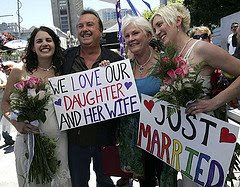
- Gay/lesbian marriage
- cloning
- genetically modified crops
- the extinction of the polar bear
3.Why is it hard to decide whether these things are right or wrong?
4. Nowadays people seem to be preoccupied with ethics, both in the sciences and in the rest of society (Toulouse, 2006; Somerville, 2006). Why do you think this is so?
Jigsaw Reading & Listening Comprehension/ "Expert"
- Work in pairs.
- You will be assigned either a erading or a listening exercise
- The reading involves 1 of 2 extracts from the book The Ethical Canary by the world's leading expert on ethics, Margaret Somerville. One of you will read Extract A and the other will read Extract B. When you have finished answer the questions that go with it. When you have done that explain your answers to your partner. Your teacher will then ask some students to paraphrase their partner's answers for the class.
- The listening exercise involves listening to 5-6 minute s of an interview with Margaret Somerville and answering the questions that relate to it. When you have done that explain your answers to your partner. Your teacher will then ask some students to paraphrase their partner's answers for the class.
Reading
Extract A
"Why has this search for ethics emerged now? In our postmodern, industrialized Western democracies? They are societies characterized by being pluralistic, secular in the public square and poltically, and multicultural. These same features mean that these societies lack a 'shared story' - the collection of fundamental values, principles, beliefs, myths and commitments that we use to give meaning to our communal lives. This story, or societal-cultural paradigm, is the glue that holds us together.
However, at present, in secular societies we are in search of a new story. Some of the factors that have caused the collapse of our old story result from the extraordinary advances in science and technology, the neurosciences, nanotechnology, artificial intelligence or molecular biology and genetics. The possibilities these advances open up are mind-altering, society-altering and world altering and, depending on how we use them, could radically alter our human nature or even annihilate us. We have become very sensitive to the threats that these new technologies present to our physical existence and our planet." (p.18)
Extract B
"Our contemporary search for ethics shows, I believe, that we are becoming much more sensitive than have been to [the] threats to our human spirit - the deeply intuitive sense of relatedness or connectedness to all life, especially other people, to the world, the universe and the cosmos in which we live; the intangible, invisible, immeasurable reality that we need to find meaning in life and make life worth living. In short, the human spirit is the metaphysical reality (that which is beyond the physical) that we need to fully live fully human lives." (p.18)
"Can we in practice implement a view that something - for instance human cloining - is inherently wrong in a society that has no absolute moral rules or no external source of authority for those moral rules that it does have? Can we believe in a moral absolute, even if we are not religious and even if we do not believe in a supernatural being as the ultimate authority? I propose we can do this by accepting two values, which are probably two sides of the same coin, as absolutes. First, we must always act to ensure profound respect for all life, in particular, human life; second we must protect the human spirit, which I defined earlier in this chapter. If our development or use of any given scientific technology, for example, would seriously harm the fulfilment of these two values, it is inherently wrong." (p.25)
Question for Extract A
pluralistic
secular
the public square
lack
glue
alter
threats
2. Compare the answers given to questions 3 and 4 with the opinion of Margaret Somerville expressed in Extract A.
Questions for extract B
1. Explain the following terms using either your own general knowledge or if you can't use a learners dictionary such as the Collins Cobuild Dictionary. You may like to use an on-line dictionary such as the Merriam-Websters. In your explanation say what part of speech it is, i.e.,
is it a verb, adverb, a noun, a compound noun, or an adjective?
connectedness
intangible
metaphysical
implement
inherently
a moral absolute
harm
fulfillment
2. Margaret Somerville believes there should be actions that are inherently wrong in order to generate ethical rules in modern secular society that everyone can agree on. Explain to your partner how she proposes to do this.
Listening
Listen to part of an interview with Margaret Somerville where she talks about her principal ideas.
This is an information gap listening. You will be placed in one of five groups. Each group is responsible for part of the listening exercise. Your task is to listen to your assigned part answer the questions and share them with the members of your group. Once you have done this you will then share them with the class. While listening to your class mates you should take notes and ask questions if you don't understand.
Please Note
You will find this a challenging listening. It is challenging for a couple of reasons. Firstly, because it is authentic and not tailored or simplified for English language students. Secondly, Somerville has a lot to say and very easily answers questions drawing in a maximum amount of information that does not initially appear to be relevant to the interviewer's questions. Best of luck!
Some vocabulary and expressions
to bring you down to tin tacks = to make you talk about specifics
to cause a fuss = to make irritating problems
cubby hole = a small cupboard without a door - in this context refers to an intellectual's safe and comfortable place in the academic world
to have a run in with someone=to have an argument with someone
to feel out on a limb = to feel vulnerable
- Listen to Margaret Somerville - RealMedia
- WinMedia
- Margaret Somerville ABC Radio interview information page
1.Why is Margaret Somerville protected by body guards ? 1:30-3:00 mins.
2. What is her stand on gay rights? 1:40-2:00 mins.
3. How does she feel about pain? Explain why she opposes circumcision of infants. What are some benefits of circumcision? 3:06-4:14 mins
4. Margaret Somerville was accused of anti-semitism because of her opposition to the practice of circumcision on infants. However, five Jewish rabbis defended her. Why? 4:13-4:42 mins.
Group 2
5. Why has she become the most cited academic in Canada? 5:03-5:30 mins
6. Why is Somerville always in the media? 5:57-7:05 mins
7. Somerville has a taste for controversy. Retell her run in with her teacher Sister Rosemary at the age of seven, and then explain why she may like being in controversial situations. 7:05-9:45 mins.
Group 3
8. What is Somerville's definition of ethics? 9:45-10:12 mins
9. Explain why she opposes same sex marriage. 11:01-16:30 mins.
-What does she mean by "Can the future trust us?"
-Talk about the definition of marriage
-Mention advances in medical science to enable homosexual couples to have their own genetic children
-What are 'the civil unions' in the UK and le pax civile in France and why were they created?
Group 4
10. What is transhumanism and what are her views on it? 16:35-20.00 mins.
-What is her major project?
11.She claims that the evolutionary biologist Richard Dawkins the author of The God Delusion is "mystically tone-deaf", what does she mean by this? 20:02-21:35 mins.
12. Richard Dawkins blames all the evils in the world on religion. What is Somerville's response to this? Do you agree with her reasoning? 21:35- 22:48 mins.
Group 5
13. What are Somerville's thoughts on the existence of God and an afterlife? 22:49-25:33 mins.
14. Somerville cites a Japanese saying, explain what it means and why she said it. "As the radius of knowledge expands the circumference of ignorance increases."25:33-26:00 mins.
"Critique"
In your groups say whether you agree or disagree with Margaret Somerville. Give your reasons. Present your conclusions to the class.
"Evaluation"
Without talking to your neighbour write no more than 70 words describing what you learnt, in other words have your opinons changed or have they been confirmed? Submit your comment as comment to this post.
Writing Assignment
1) Writing Definitions of Terms
In small groups try to write definitions of the two central ideas contained in the two extracts: society's shared story and the human spirit .
The general rule for composing definitions is to first state the term, then say into which class of ideas or things it belongs and finally to identify its distinguishing characteristics; that is, the things that separate it from other things in its class.
For example:
Ethics (term) is a branch of philosophy (class) that deals with the study of the rightness and wrongness of thoughts and actions (distinguishing characteristics).
2. Write a blog comment
After having done the reading and listening exercises in no more than 70 words give your opinion on one of the following topics:
- Transhumanism
- Same sex marriages
- Somerville's moral absolutes: Protect life, especially human life, and the human spirit
Say whether you think they are right or wrong and explain why. Leave your answer as a comment to this blog.
Key points
Somerville is interested in making the physical and spiritual essence of humanity sacred and therefore inherently wrong to compromise it. It is similar to the idea that we are OK the way we are and it is not for us to interfere with who we are.
This leads to the question of whether we should freeze human evolution or participate actively in it. According to the transhumanists, Homo sapiens is an imperfect species and we have the unprecedented opportunity, through the new genetic sciences, to become whatever our imaginations can dream up.
The notion of protecting the current human condition or essence is analogous to the preservationist approach to the conservation of biodiversity. In this case a natural site is preserved and any seemingly unnatural changes are blocked. This involves the elimination of invasive species. A high profile example is the extermination of the North American grey squirrel in some parts of Britain to favour the native red squirrel. This is the subject of the next lesson, follow the link below:
Follow-up lesson:
Connections between two ethical issues & Your World View
- References
- Somerville, M. (2006) Searching for ethics in secular society. In ten Have, H. ed. Ethics of science and technology. UNESCO, Paris. pp. 17-40
- Toulouse, G. (2006) Scientific revolutions and moral revaluations. Science and Society : New ethical Interactions. Milan: Fondazione Carlo Erba
- Photos from Flickr.com
- Deforestation Madagascar by DawaFree
- Madagascar periwinkle by Rana Pipiens
- Abu ghraib by luna park
- Cranes by tinyfish
- Hands and fetus by ws-sanctuary
- Honey bees disappearing by Paul_T
- Lesbian wedding by Dr. Cedric
- Nuclear power plant by aerial photography
- Pollution- viva kyoto by pfala
- Venus Cyborg by Tartx
- Avicenna (Ibn Sina) by Socialist Art by Night Eulen
- Taoism by princess tiger lily
- All extracts from The Ethical Canary used with permission from Margaret Somerville
© All Copyright, 2008, Ray Genet
Subscribe to:
Posts (Atom)




+II+-+socialist+art+by+night+_eulen.jpg)